Evolutio Sports Physio Richmond
  • Home
  • About
  • Services
  • Team
  • Prices
  • FAQs
  • Contact
  • Book In
  1. Home
  2. Rehab Guides
  3. Shoulder Rehab Guide

Rehab Guide · Richmond, Melbourne

Your shoulder's comeback starts here.

A complete guide to shoulder rehabilitation from Melbourne's sports physiotherapists — covering rotator cuff injuries, frozen shoulder, post-surgical recovery, and return-to-sport protocols.

7 in-depth chapters Exercise blueprints included Sport-specific protocols
See shoulder physio Book assessment
Evolutio physiotherapist — shoulder rehabilitation guide Melbourne

Introduction

Why your shoulder deserves better than a generic guide.

Shoulder pain isn't just about discomfort. It's about losing the ability to do almost anything without hesitation. At Evolutio, we understand this deeply — we've treated shoulder injuries from AFL, CrossFit, and Olympic lifting, and we've been on the receiving end of them too.

Melbourne's active community faces shoulder challenges that most guides completely miss. Whether it's a swimmer's shoulder from the city's pool culture, repetitive stress from tennis courts across the suburbs, or the classic desk-to-weekend-warrior pattern, your recovery needs local understanding and a plan that fits your life.

Bayden Campbell — Sports Physiotherapist at Evolutio Richmond

Bayden Campbell — Sports Physiotherapist, Evolutio Richmond

This guide was written by the sports physio team at Evolutio Richmond. It covers everything from acute management through to bulletproofing your shoulder for the long term. Use it alongside professional assessment — not instead of it. If you're ready to get started, you can book a shoulder assessment here.

In this guide

Seven chapters. One shoulder comeback.

Jump to any chapter, or read from top to bottom for the full picture.

  1. 01Your Shoulder's Complex Reality
  2. 02The Big Four Shoulder Conditions
  3. 03The Evolutio Recovery System
  4. 04Exercise Blueprints That Actually Work
  5. 05Melbourne's Sport-Specific Return Protocols
  6. 06Shoulder Bulletproofing for Melbourne Athletes
  7. 07The Mental Game of Shoulder Recovery

Chapter 01

Your shoulder's complex reality.

The shoulder is the most mobile joint in the body — and that mobility comes with trade-offs. Understanding how Melbourne's lifestyle shapes shoulder health is where every recovery starts.

Our shoulder physio service

The Melbourne Athlete's Upper Body Challenge

Melbourne's lifestyle creates particular shoulder stresses that traditional rehabilitation methods never fully address. Desk work dominates weekdays, then weekend warriors attempt ambitious physical activities without adequate preparation. Tuesday's spreadsheet shoulders meet Saturday's tennis serve demands — a combination that creates predictable problems.

Melbourne's fitness culture compounds this. CrossFit boxes from Collingwood to Caulfield emphasise overhead movements. Tennis courts across the suburbs demand repetitive overhead actions. Swimming pools from the Melbourne Sports and Aquatic Centre to local leisure facilities create stroke-specific shoulder adaptations. These activities shape shoulder function in ways generic rehab guides miss entirely.

Melbourne's year-round activity culture also creates cumulative stress patterns different from athletes in other cities. Understanding your individual shoulder story — your work demands, training history, past injuries — matters more than any single diagnosis.

Reading Your Shoulder's Story

Every shoulder tells a unique story through movement patterns, injury history, work demands, and lifestyle factors. Effective shoulder treatment requires decoding these individual signatures, not applying generic protocols.

Two people with identical rotator cuff tears may need completely different recovery approaches based on their work, training, and goals. A lawyer who swims before cycling to the office has entirely different shoulder demands than a tradesperson who also climbs on weekends. These psychological and lifestyle components influence pain perception, recovery motivation, and whether rehabilitation actually sticks.

Work patterns profoundly influence shoulder function in ways many practitioners underestimate. Melbourne's professional community spends hours in forward head postures that alter shoulder blade position and rotator cuff function. These postural adaptations affect how shoulders respond to recreational activity — and they require specific addressing, not just shoulder exercises.

Chapter 02

The big four shoulder conditions.

Most shoulder problems fall into one of four categories. Understanding which one you're dealing with — and why it happened — is the foundation of effective recovery.

Get a diagnosis
01

Rotator Cuff Injuries: The Silent Strength Stealers

Rotator cuff problems are the most common shoulder issue facing Melbourne's active community. These four small muscles — supraspinatus, infraspinatus, teres minor, and subscapularis — work together to stabilise the shoulder during movement. When this system breaks down, pain and weakness follow.

Traditional approaches often focus exclusively on the torn or irritated tissue. Effective rotator cuff treatment requires understanding why the tissue became problematic. Often, poor shoulder blade control forces the rotator cuff to work excessively hard. Thoracic spine stiffness creates compensatory patterns that stress cuff tissues. Our approach addresses the entire system, not just the painful structure.

For athletes who also cycle, bike positioning significantly influences shoulder function. Our partners at Ciclo Melbourne can assess cycling setups that may be contributing to shoulder problems while our team addresses the resulting dysfunction.

02

Frozen Shoulder: When Movement Becomes Memory

Frozen shoulder (adhesive capsulitis) is one of the most frustrating shoulder conditions. The joint capsule becomes inflamed and then stiffens, creating severe movement restrictions that can persist for months or years without appropriate treatment. It most commonly affects women aged 40–60, particularly those with diabetes or thyroid conditions.

The condition progresses through three distinct phases: a freezing phase (2–9 months) with increasing pain and stiffness, a frozen phase (4–12 months) with stable severe restriction and less pain, and a thawing phase (12–42 months) with gradual improvement. Understanding which phase you're in completely changes treatment intensity and technique. Aggressive stretching during the freezing phase typically worsens the condition.

Rather than focusing solely on range-of-motion numbers, our treatment prioritises movements that matter for daily life — reaching overhead cupboards, washing hair, fastening clothing. These functional goals guide exercise selection in a way that abstract degree measurements never do.

03

Post-Surgical Recovery: Building Back from Scratch

Whether recovering from rotator cuff repair, shoulder stabilisation, or joint replacement, the post-surgical period demands expert guidance and genuine patient commitment. Melbourne's surgeons follow specific protocols that guide rehabilitation timeframes and exercise progression — but protocols provide frameworks, not rigid rules. Individual variation always requires adaptation.

Post-surgical rehabilitation progresses through distinct phases: an immediate protection phase, an intermediate active motion phase, an advanced strengthening phase, and finally functional preparation. We maintain close communication with surgical teams to coordinate care and ensure exercises remain appropriate for your specific procedure and healing timeline.

For those requiring frequent treatment during longer recovery periods, mobile physiotherapy through HomeRun Physio can reduce the burden of clinic visits during extended recoveries.

04

Return-to-Sport: Getting Your Game Back

Returning to sport after shoulder injury is one of the most nuanced aspects of rehabilitation. Athletes must regain not only strength and mobility but also the confidence and neuromuscular control required for high-level performance under competitive pressure. Generic "cleared to play" decisions without proper objective testing are a common cause of re-injury.

Melbourne's sporting culture encompasses diverse activities with vastly different shoulder demands. Tennis players require explosive overhead serving ability. Swimmers need enduring stroke efficiency. CrossFit athletes must handle varied overhead patterns under fatigue. Each requires a sport-specific return protocol, not a one-size-fits-all approach. For athletes training at facilities like CrossFit Hawthorn East, close communication between physiotherapy and coaching ensures appropriate modifications throughout the return phase.
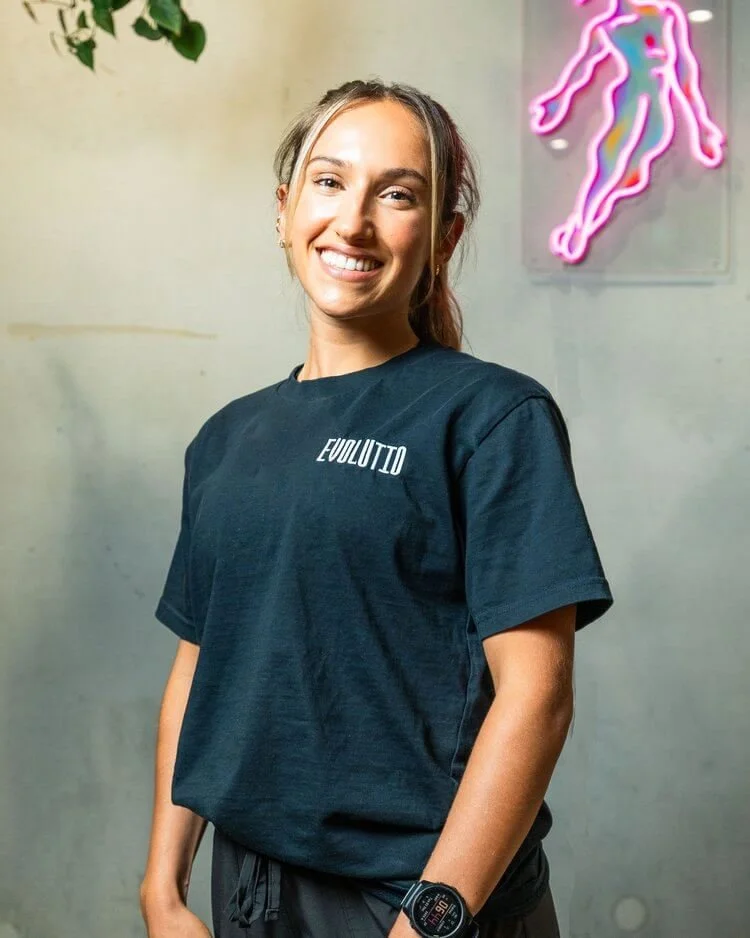
"In the physio world, shoulders are notoriously the hardest yet most enjoyable injuries to treat. They are complex, and rely on the physio to use observation, listening skills, initiative, and creative thinking to fix the issue."
Evolutio Sports Physio Team — Richmond, Melbourne

Chapter 03

The Evolutio recovery system.

Four phases. From the moment something goes wrong through to a stronger, more capable shoulder than you had before.

Book your assessment
01

Acute Phase

"What Just Happened?" — Acute Management

The immediate response in the first few days after injury significantly influences everything that follows. Stop aggravating activities immediately. Initial management uses modified RICE principles — Rest from aggravating activities, Ice for pain and inflammation (15–20 minutes every 2–3 hours), gentle Compression where appropriate, and Elevation when practical. Modern understanding emphasises early gentle movement over complete immobilisation for most shoulder conditions. Positioning strategies matter too — sleeping with additional pillow support and avoiding overhead reaching reduces stress on healing tissues.

02

Assessment Phase

"Let's Sort This" — Assessment and Planning

Once acute symptoms settle (usually 3–7 days), focus shifts to understanding why the injury occurred. This phase separates successful recoveries from chronic problems. The team at Evolutio conducts thorough evaluations examining not just the shoulder but the entire kinetic chain. Movement analysis reveals how posture, shoulder blade control, and compensatory patterns contribute to injury. Workplace assessment often identifies significant contributing factors — monitor position, keyboard height, and daily posture habits all influence shoulder blade position and rotator cuff function. Most patients are surprised to learn their shoulder pain stems from thoracic spine stiffness or hip mobility restrictions.

03

Rehabilitation Phase

"Rebuilding the Arsenal" — Progressive Rehabilitation

This phase transforms shoulder recovery from passive healing to active improvement. Rotator cuff strengthening uses specific exercises that challenge stabilising muscles in functional patterns — external rotation work, prone horizontal abduction, and scapular control training. Shoulder blade control is the foundation from which the rotator cuff operates. Poor scapular mechanics force the cuff to work excessively hard during all overhead activities. Range of motion restoration must balance tissue protection with functional need — aggressive stretching too early is as problematic as too little mobility work. Manual therapy complements active exercise but never replaces it.

04

Performance Phase

"Bulletproof Shoulder" — Performance Return

The final phase marks transition from rehabilitation to performance optimisation. Advanced strengthening prepares shoulders for high-level demands — plyometric exercises restore the elastic properties needed for explosive movements like throwing and serving. Sport-specific training introduces movement patterns and intensities that replicate actual activity. Load management is critical here as enthusiasm regularly exceeds tissue readiness. Video analysis and movement screening identify compensatory patterns that might predispose to future injury. Confidence building requires successful experiences with challenging activities that demonstrate recovered capability.

Chapter 04

Exercise blueprints that actually work.

Evidence-based exercise progressions, structured by phase. For specific exercise prescription tailored to your injury, book a full assessment with our team.

Shoulder physio service

Rotator Cuff Recovery Protocol

A progressive six-week foundation protocol. Always work within pain-free ranges and progress at the slower end if symptoms flare.

Weeks 1–2 · Protection

Gentle Activation

  • Pendulum exercise — arm hanging freely, gentle circles and swings. 1–2 min, 3× daily.
  • Scapular retraction — squeeze shoulder blades together, hold 5 sec. 3 × 10 reps.
  • Isometric external rotation — elbow at 90°, press hand into wall without moving. 5-sec holds, 10 reps.
  • Ice 15–20 min after any activity that increases symptoms.
Weeks 3–4 · Loading

Progressive Strengthening

  • Resistance band external rotation — band at elbow height, rotate out. 2 × 10 reps.
  • Prone horizontal abduction — lying face down, arm out to side to shoulder height. 2 × 8 reps.
  • Wall slides — forearms against wall, slide up and down maintaining contact. 2 × 10 reps.
  • Begin active range-of-motion in pain-free ranges.
Weeks 5–6 · Function

Functional Preparation

  • Shoulder press progression — partial range first, advancing to full overhead as comfort allows. Focus on control.
  • Functional reaching — overhead cupboards, across-body, behind back. Replicate daily tasks.
  • Sport-specific patterns — modified throwing, stroke, or overhead motions specific to your activity.
Frozen Shoulder

Phase-Appropriate Mobility

  • Passive range of motion — have someone gently move your arm while you remain relaxed. Forward flexion, external and internal rotation.
  • Heat before exercise — warm pack or shower 10–15 min prior to improve tissue flexibility.
  • Contract-relax stretching — push into restriction, relax, then allow gravity to move further into range.
  • Respect the phase — aggressive stretching in the freezing phase increases pain without improving movement.

Post-Surgical Phases at a Glance

1–6w

Protection Phase

Protect the surgical repair. Passive range of motion only. Gentle isometric activation as comfort allows. The priority is tissue protection, not exercise volume.

6–12w

Active Motion Phase

Progressive introduction of active movement as healing and inflammation resolve. Exercises advance from passive-assisted to fully active as strength and comfort improve.

12–20w

Strengthening Phase

Systematic strengthening from isometric through increasing ranges of motion and resistance. Scapular control becomes a major focus as load tolerances improve.

5–6m+

Functional Phase

Integration of strength and mobility into functional and sport-specific movements. Return to previous activity levels requires objective demonstration of adequate strength, mobility, and neuromuscular control. External resource: AOA shoulder surgery information.

Chapter 05

Melbourne's sport-specific return protocols.

Different sports create entirely different demands on recovering shoulders. Here's how we approach the four most common in Melbourne's active community.

Book sport assessment

Tennis & Racquet Sports

Tennis places unique demands on shoulders. The explosive overhead serve creates some of the highest forces the shoulder experiences. Return protocol prioritises groundstrokes first, with serving returning last.

Return timeline Weeks 1–2: wall hitting, gentle groundstrokes · Weeks 3–4: partner rallying, modified serves · Weeks 5–6: competitive hitting, full serves · Week 7+: match play with monitoring

Swimming & Water Sports

Swimming creates repetitive overhead demands. Buoyancy reduces joint stress while water provides resistance, making pools ideal for early rehabilitation. Stroke technique often requires temporary modification on return.

Return timeline Pool walking and gentle arm movements → modified strokes, reduced intensity → gradual return to full stroke rate and distance. Recommended venues: MSAC, Harold Holt Swim Centre.

CrossFit & Overhead Athletics

CrossFit's combination of Olympic lifting, gymnastics, and varied implement training demands sophisticated shoulder preparation. Modified workouts allow continued training participation while respecting healing.

Return timeline Weeks 1–2: modified WODs, no overhead · Weeks 3–4: light overhead, strict movements only · Weeks 5–6: moderate loads, some kipping · Week 7+: full participation. See our CrossFit physio service.

Climbing & Overhead Work

Rock climbing combines overhead reach with grip strength and body weight support. Indoor facilities around Melbourne provide controlled environments for graduated return progressions based on route grade.

Return approach Begin with lower-grade routes that prioritise leg and core use. Grip strength and shoulder stability training should continue in parallel. Route grade and hold type selection drives load progression through the return phase.

Chapter 06

Shoulder bulletproofing for Melbourne athletes.

Prevention is far less costly than recovery. These strategies address the patterns that create shoulder problems in Melbourne's specific context.

The Melbourne Weather Factor

Melbourne's rapid temperature changes increase muscle stiffness and reduce tissue flexibility. Cold mornings require extended warm-ups. The shift from winter indoor training to spring outdoor enthusiasm is a high-risk period. Extend warm-ups in cold weather, and plan seasonal conditioning programs to prepare for activity transitions.

Office Worker's Shoulder

Melbourne's professional community combines prolonged poor posture with ambitious weekend activity. Monitor at eye level, keyboard at elbow height, position changes every 30–60 minutes. Shoulder blade squeezes, neck stretches, and arm circles can be done discretely at your desk. Going directly from computer posture to a tennis court without preparation is a recipe for injury.

Movement Variety

Overuse patterns develop when shoulders are exposed to the same stresses repeatedly. Cross-training, seasonal activity changes, and regular movement pattern modifications help distribute load across different tissues. This is especially important for single-sport athletes training year-round.

Strength Maintenance

Strength becomes increasingly important with age as natural muscle mass declines. Regular resistance training preserves shoulder function and reduces injury risk during recreational activities. A maintenance program of 15–20 minutes of targeted shoulder exercises per week makes a significant difference to long-term resilience.

Sport-Specific Prevention

Different sports create predictable stress patterns requiring tailored prevention. Tennis: serving technique optimisation and posterior shoulder flexibility. Swimming: stroke refinement and dry-land strengthening. CrossFit: movement quality emphasis and progressive loading. Each sport has its own injury risk profile that benefits from targeted prevention work.

Early Intervention

Shoulder problems often develop gradually, which means early intervention is available for those who pay attention. Minor niggles are warnings. Addressing them with a brief assessment and targeted exercise program prevents the escalation that turns a week's inconvenience into months of rehabilitation. If in doubt, get it checked.

Chapter 07

The mental game of shoulder recovery.

Physical tissue healing is only part of the picture. Fear of re-injury, movement confidence, and pain psychology shape outcomes as much as any exercise program.

Overcoming Movement Fear

Shoulder injuries often create movement fears that persist long after tissues have healed. Fear-avoidance behaviours develop when specific movements become associated with pain — overhead reaching, throwing, or simply lifting the arm can trigger anxiety that limits function even when healing is complete. These patterns can be more limiting than the original injury.

Graduated exposure provides systematic approaches to rebuilding movement confidence. Starting with comfortable, controlled movements and progressing toward more challenging activities helps rebuild trust in shoulder function without unnecessary provocation. Understanding the difference between protective discomfort and harmful pain helps people navigate return to activity — some discomfort during recovery is normal, while sharp or severe pain requires attention.

Pain Psychology and Recovery

Pain is a complex experience involving physical, emotional, and cognitive components. It doesn't always directly correspond to tissue damage — particularly during recovery phases. Central sensitisation can create persistent pain sensations even after tissues have healed completely. This is not imagined pain; it's a real neurological phenomenon that requires specific approaches.

Pain education is one of the most powerful therapeutic tools available, and it's consistently underused. Understanding how pain works, what it means during recovery, and how it changes over time helps people participate more actively in their improvement. The Australian Physiotherapy Association and Sports Medicine Australia both recognise the psychological component of musculoskeletal recovery as a first-order concern.

Returning to Trusted Movement

The ultimate goal of shoulder recovery extends beyond pain elimination to restoration of confident, efficient movement that supports desired activities and lifestyle. This requires integrating physical improvements with psychological readiness — and they don't always progress at the same rate.

Movement efficiency often improves during recovery as people develop genuine body awareness. The attention focused on shoulder function during rehabilitation regularly produces better movement patterns than existed before injury. Long-term success requires maintaining gains through continued exercise, sustained awareness, and seeking early intervention when things change. Recovery confidence built through shoulder rehabilitation often improves overall movement quality and activity participation more broadly.

FAQ

Your shoulder questions, answered.

The questions we hear most often at Evolutio. Click any question to expand the answer.

Full FAQ page

If your shoulder has been bothering you for more than a week, or you're compensating how you move because of it, it's time to come in. Don't wait until you can't lift your arm or you're taking painkillers to sleep. Minor rotator cuff irritation turns into major problems when ignored — we see this pattern constantly.

Early intervention consistently produces faster, more complete recoveries. Book a shoulder assessment here.

It depends enormously on what's happening. Minor irritation might resolve in a week. Complex post-surgical cases can take 12+ months. Frozen shoulder has its own extended timeline. What matters more than timeframes is identifying and addressing the underlying cause, not just managing symptoms.

Most shoulder conditions we see at Evolutio resolve meaningfully within 6–16 weeks with appropriate management. We'll give you an honest timeline at your first visit.

Nine times out of ten, it's because the symptom is being treated rather than the cause. Your rotator cuff doesn't just decide to flare up randomly. Usually it's working overtime because the shoulder blade isn't doing its job, or the thoracic spine is stiff from desk work. Addressing those underlying factors is what stops the cycle.

Our shoulder physio service is specifically designed to identify and address root causes rather than managing recurring symptoms.

Usually yes, with appropriate modifications. Complete rest rarely helps most shoulder conditions. Pool-based exercise is excellent for shoulders — buoyancy reduces joint stress while water provides resistance. Modified gym training allows continued conditioning without aggravating the shoulder.

For CrossFit athletes, we work with local boxes including CrossFit Hawthorn East to design modified workout programs that keep you training safely during recovery.

It's frustrating, no question. But here's what most people don't understand — frozen shoulder moves through distinct phases, and knowing which phase you're in makes treatment far more targeted. Aggressive stretching in the freezing phase typically makes things worse. Phase-appropriate treatment in the frozen phase can significantly reduce the overall recovery timeline.

We've guided hundreds of people through frozen shoulder at Evolutio. Yes, it does get better. The key is respecting the process while actively working within it. Learn more about our frozen shoulder approach.

Completely normal. Fear of re-injury affects most people returning from significant shoulder problems. That's why we progress gradually and build confidence systematically — each successful movement builds trust in your shoulder again. We work with the psychology of recovery, not just the physical side.

Yes — we work with most private health funds via HICAPS and provide rebates where applicable. We also accept WorkSafe Victoria, TAC, DVA, NDIS, and EPC (Medicare) plans. Call us on 03 9100 3798 to check your specific situation, or see our pricing and rebates page. No surprises.

Any previous scans or imaging reports, a list of current medications, and details about what activities aggravate or ease your symptoms. Wear something you can move in comfortably. If you have sport-specific or work-specific demands, tell us about them — context is everything for shoulder assessment. Full details on our first visit guide.

Ready to Start?

Your shoulder's best days may still be ahead of you.

The team at Evolutio Richmond has guided thousands of shoulders back to full function — and often beyond. Book a comprehensive shoulder assessment and let's build a recovery plan around your life.

Book an assessment Our shoulder physio service

Also worth reading

More rehabilitation guides from Evolutio.

Knee & Lower Limb

Complete ACL Recovery Guide Melbourne

From surgery to full return-to-sport — the complete ACL rehabilitation roadmap.

Read guide
Running

Running Injury Rehab Guide Melbourne

Address the root cause of running injuries and build a more resilient runner.

Read guide
Spine

Lower Back Pain Rehab Guide Melbourne

Evidence-based approaches to lower back pain for Melbourne's active population.

Read guide
Evolutio Sports Physio Richmond

Fixing Limbs and Mending Hearts since 2013

Address   11/3 Bromham Place, Richmond VIC 3121

Phone   03 9100 3798

WhatsApp   +61 430 436 531

Email   info@evolutio.com.au

Hours   Mon–Thu 8am–7:30pm · Fri 8am–6pm · Sat 8am–1pm

Shoulder Resources

  • Shoulder Physiotherapy
  • Shoulder Rehab Guide
  • Book Shoulder Assessment
  • AOA Shoulder Info
  • Sports Medicine Australia

Conditions We Treat

  • Shoulder Pain
  • Knee Pain
  • Back Pain
  • Neck Pain
  • Hip Pain
  • ACL Rehab
  • Running Injuries
  • CrossFit Injuries

About Evolutio

  • Our Story
  • Our Team
  • Services
  • Prices 2026
  • FAQs
  • Clinical Outcomes
  • Contact

© 2026 Evolutio Sports Physio Richmond (Melbourne) — Independent sports physiotherapy clinic est. 2013. Privacy Policy

Prices Book In Home
0