Evolutio Sports Physio Richmond
  • Home
  • About
  • Services
  • Team
  • Prices
  • FAQs
  • Contact
  • Book In

Shoulder Physiotherapy · Richmond, Melbourne

Shoulder Physiotherapy Melbourne | Evolutio Sports Physio Richmond

Your shoulder is complex. So is our approach to fixing it.

From rotator cuff tears to frozen shoulder, impingement to post-surgical rehabilitation. Our Richmond team treats the full spectrum of shoulder conditions with evidence-based care and genuine clinical depth.

100+ shoulder cases in 2026 Est. 2013 Richmond, 8 min from station
Book a shoulder assessment What we treat
Shoulder physiotherapy assessment at Evolutio Sports Physio Richmond
  1. Home
  2. Our Services
  3. Shoulder Physiotherapy Melbourne

Book Online

Ready to get started? Pick a time.

Book your initial shoulder assessment online. No referral needed. Or call us on 03 9100 3798 or WhatsApp if you would prefer.

About our approach

The shoulder is the most mobile joint in your body. That mobility comes at a cost.

The glenohumeral joint sacrifices inherent stability for range of motion, which is why shoulder injuries are so common, so varied, and so easy to manage poorly. What works for impingement can aggravate instability. What is appropriate at week four post-surgery is not appropriate at week two. Generic exercise sheets do not cut it.

At our Richmond clinic, shoulder presentations make up a substantial part of our caseload, from swimmers and CrossFit athletes with overhead injuries to office workers developing secondary impingement from sustained postures. That volume of experience creates pattern recognition that accelerates both diagnosis and recovery.

We also know when to refer. Our relationships with Melbourne's leading orthopaedic surgeons mean that if your shoulder needs surgical intervention, you will be in the right hands. And when you return to us for rehabilitation, your program will follow your surgeon's protocol precisely. The goal throughout is the same: get you back to what you love, as fast as the evidence allows.

Conditions We Treat

Every shoulder condition, properly addressed.

The shoulder is not a simple joint and your diagnosis matters. Here is the full range of conditions our physiotherapists manage.

01

Rotator Cuff Tears and Tendinopathy

Partial and full-thickness rotator cuff tears, rotator cuff tendinopathy, and calcific tendinitis. Conservative rehabilitation avoids surgery in a significant proportion of cases. Post-surgical rehabilitation follows your surgeon's specific protocol.

Partial tears Full thickness Tendinopathy Post-surgical
02

Frozen Shoulder (Adhesive Capsulitis)

Primary and secondary adhesive capsulitis managed across all three phases: freezing, frozen, and thawing. Treatment adapts to each stage. Read our frozen shoulder guide for a full explanation of each phase.

Primary Secondary Post-fracture stiffness
03

Shoulder Impingement

Subacromial impingement syndrome, internal impingement in overhead athletes, and secondary impingement driven by poor scapular control or postural habits. The classic painful arc and pinching when reaching overhead are usually very treatable conservatively.

Subacromial Internal Secondary
04

Shoulder Instability and Dislocation

Traumatic and atraumatic instability, post-dislocation rehabilitation, and post-surgical stabilisation including Bankart repair and Latarjet procedures. Instability rehabilitation requires precision: the balance between mobility and stability varies significantly between individuals and sports.

Dislocation Subluxation Post-surgical
05

AC Joint Injuries

Acromioclavicular joint sprains (grades I to VI), AC joint arthritis, and post-surgical AC joint rehabilitation. A common contact sport injury in football, rugby, and cycling falls that responds well to physiotherapy when managed correctly from the start.

Sprains Arthritis Post-surgical
06

Biceps Tendon and SLAP Lesions

Long head of biceps tendinopathy, biceps tendon ruptures, and superior labral tears (SLAP lesions). Common in CrossFit athletes, swimmers, and overhead workers. Often misdiagnosed as general shoulder pain.

Biceps tendon SLAP Labral tears
07

Shoulder Bursitis

Subacromial and subdeltoid bursitis, often occurring alongside impingement or rotator cuff irritation. Physiotherapy addresses the mechanical cause of the bursal irritation rather than just the inflammation. See our shoulder bursitis guide.

Subacromial Subdeltoid
08

Neck-Related Shoulder Pain

Cervical radiculopathy and referred pain from the neck are frequently mistaken for intrinsic shoulder pathology. Our assessment always includes the cervical spine, because treating the wrong structure prolongs recovery unnecessarily.

Radiculopathy Referred pain Cervical origin
09

Swimmer's Shoulder and Overhead Athletes

Shoulder pain in swimmers, water polo players, tennis players, and overhead throwing athletes involves specific biomechanical patterns including posterior capsule tightness, glenohumeral internal rotation deficit, and scapular dyskinesis that require sport-specific rehabilitation.

Swimming Tennis Throwing athletes
Our Approach

How we actually treat shoulders.

Five things that separate a genuinely good shoulder physiotherapist from a generalist who sees a few shoulders per week.

Read our Shoulder Rehab Guide
01

Diagnosis before treatment

Every shoulder assessment starts with identifying the specific structures involved, not just the symptom pattern. We use orthopaedic special tests, scapulohumeral rhythm analysis, rotator cuff strength testing in multiple positions, and shoulder stability assessment. The diagnosis drives everything that follows. If imaging is needed, we will tell you that at appointment one rather than after three sessions of guesswork.

02

Hands-on treatment from the start

Manual therapy including joint mobilisation, soft tissue techniques, and dry needling where indicated is used alongside exercise, not instead of it. Passive treatment alone does not fix shoulders. But skilled hands-on work reduces pain, restores joint mechanics, and allows people to engage meaningfully with their exercise program from session one.

03

Progressive loading, not gentle exercises

Rotator cuff tendons respond to progressive load. Shoulder capsules recover through movement. Scapular stabilisers need graduated strengthening, not stretching alone. Our programs are built around the principle that the shoulder needs to be challenged progressively and intelligently, not protected indefinitely. We follow evidence-based loading progressions aligned with current APA clinical guidelines.

04

Sport and activity specificity

A swimmer's shoulder problem is not the same as a CrossFit athlete's shoulder problem, even if both describe shoulder pain. The loading pattern, the biomechanical demands, and the rehabilitation endpoint are entirely different. We design programs around what you actually need your shoulder to do, not a generalised range-of-motion checklist. We follow Sports Medicine Australia guidelines for sport-specific rehabilitation protocols.

05

Honest advice about surgery

Many shoulder conditions resolve conservatively with excellent physiotherapy. Some do not. We have well-established working relationships with Melbourne's leading orthopaedic shoulder surgeons and will give you an honest, evidence-based opinion about whether surgery is likely to help your specific condition. We do not keep patients in treatment indefinitely. Read our guide on shoulder arthroscopy and when you actually need one.

Rehabilitation Timeline

What to expect, week by week.

Timelines vary significantly by diagnosis. Below is a general framework for typical shoulder rehabilitation. Your physiotherapist will give you a personalised plan at your first appointment.

Weeks 1 to 2

Pain control and initial assessment

The priority in early rehabilitation is accurate diagnosis and pain reduction, not aggressive exercise. Manual therapy, education about your condition and load management, activity modification advice, and gentle range-of-motion work. For post-surgical patients, this phase follows your surgeon's specific protocol including sling use and movement restrictions.

Weeks 3 to 6

Restoring movement and scapular control

Progressive range-of-motion restoration, scapular stability exercises, postural correction for those with postural contributors, and rotator cuff activation work. Pain should be well controlled by this phase and responding predictably to load. Most impingement cases begin to feel meaningfully better during this window.

Weeks 6 to 12

Progressive strengthening

Graduated rotator cuff and periscapular strengthening, sport-specific loading introduced progressively, and movement pattern correction for any compensatory strategies that developed around the injury. Frozen shoulder patients in the frozen phase receive more aggressive capsular mobilisation during this window. Return to modified sport is often possible by the end of this phase for impingement and minor rotator cuff presentations.

Weeks 12 to 24

Return to full activity and performance

Sport-specific conditioning and return-to-performance work, injury prevention programming, and maintenance exercise prescription. Post-surgical rotator cuff repairs typically reach full strengthening work at 12 to 16 weeks, with return to sport and overhead loading at 5 to 6 months under surgeon approval. Frozen shoulder continues into the thawing phase and may require ongoing treatment through this window.

Ongoing

Maintenance and prevention

For athletes and overhead workers, a maintenance exercise program significantly reduces re-injury risk. Many of our patients return for periodic check-ins during high training loads rather than waiting for a new injury to develop. Prevention is considerably easier than rehabilitation.

For condition-specific timelines including frozen shoulder phases and post-surgical protocols, see our comprehensive Shoulder Rehabilitation Guide.

Meet Your Physio

The people treating your shoulder.

Our Richmond team brings experience across the full range of shoulder conditions, from acute sports injuries through to complex post-surgical rehabilitation.

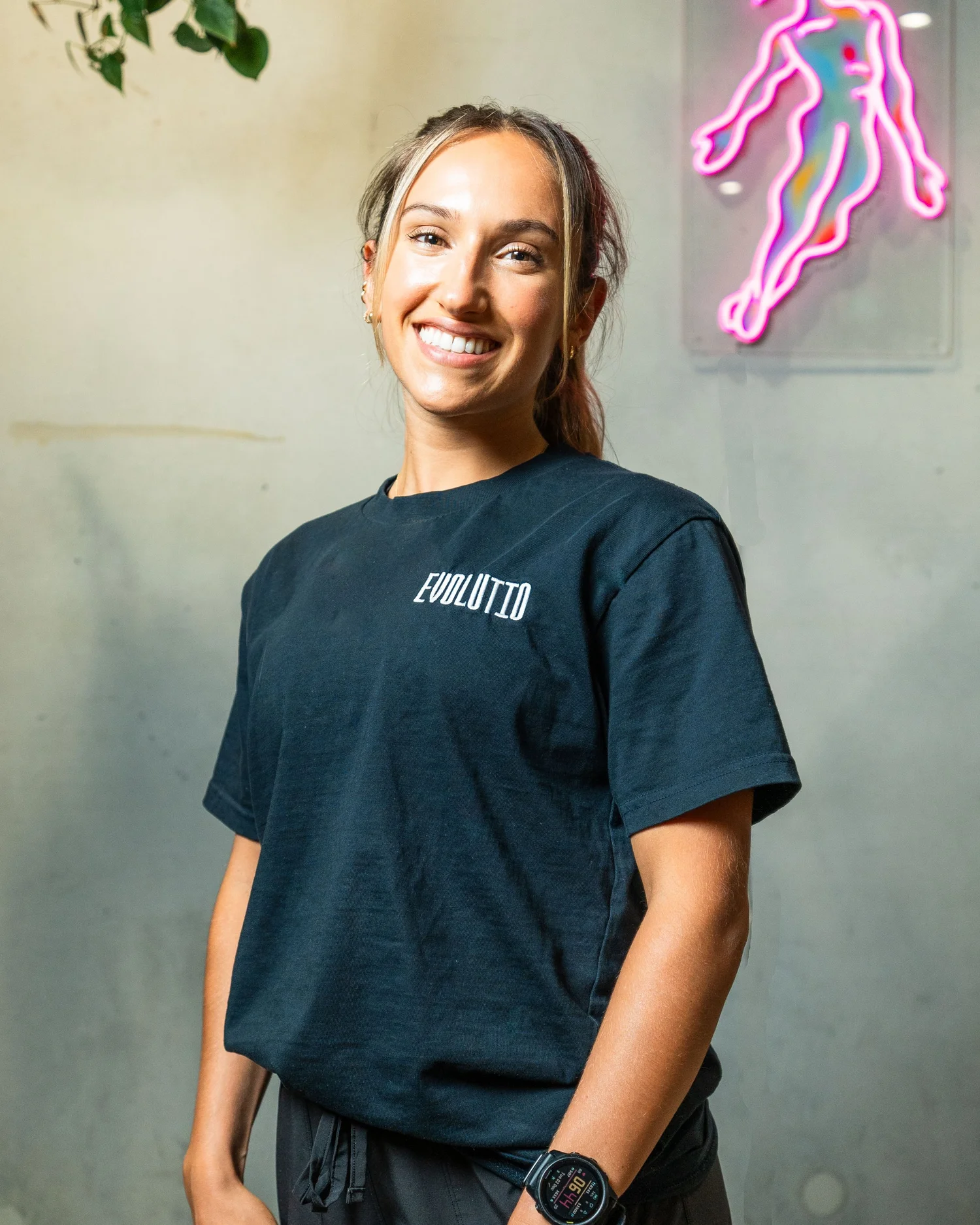
Kelsi Parker, physiotherapist at Evolutio Sports Physio Richmond

Kelsi Parker

Physiotherapist

Kelsi brings a warm, thorough approach to shoulder rehabilitation, with experience across rotator cuff injuries, impingement, and post-surgical recovery. A firm favourite with Evolutio patients.

Book with Kelsi
P

Phill Danzi

Physiotherapist · AFLW Experience

Phill's background in elite women's football and extensive experience with post-surgical shoulder rehabilitation makes him particularly well suited to complex cases requiring surgical liaison and structured return-to-sport programming. Available Saturdays.

Book with Phill
T

Our Full Team

Physiotherapists and Exercise Physiologists

Not sure which practitioner is right for your shoulder condition? View the full team including specialisations and availability, and we will help match you to the right person.

View the whole team

Not sure who to book with? WhatsApp us on +61 430 436 531 and we will point you in the right direction.

Why Evolutio

What makes the difference in practice.

Not marketing claims. The practical things that actually affect your outcome.

Volume of shoulder cases

We treated over 100 shoulder presentations in 2026 alone. Pattern recognition knowing what typical rotator cuff tendinopathy looks like versus impingement versus early frozen shoulder comes from seeing a lot of shoulders. That volume is what makes diagnosis faster and more accurate.

Registered, insured, experienced practitioners

All practitioners hold current AHPRA registration and professional indemnity insurance. We are members of the Australian Physiotherapy Association and Sports Medicine Australia.

On-site rehabilitation gym

The 80 sqm gym at Evolutio means shoulder strengthening progressions happen on-site, with your physiotherapist watching your form and adjusting loading in real time. Not at home with a theraband and a YouTube video.

Honest, direct communication

You will know your diagnosis at the end of appointment one. You will know the realistic timeline and whether conservative treatment is likely to work for your specific condition. We do not hedge, and we do not keep you in treatment indefinitely without clear progress benchmarks.

All major funding pathways accepted

Private health insurance via HICAPS on-the-spot. EPC plans with Medicare rebate. WorkSafe, TAC, DVA, and NDIS. See our full 2026 fee schedule.

Richmond location, genuinely accessible

11/3 Bromham Place, Richmond. Eight minutes on foot from Richmond Station (Lilydale, Alamein, Glen Waverley, Belgrave lines). Trams 70 and 75 stop nearby. Free street parking. Bike parking on site. Get directions.

Ready to get your shoulder sorted?

Book online in 60 seconds, or reach out and we will find the right appointment for you.

Book online 03 9100 3798 WhatsApp

Frequently Asked Questions

Questions about shoulder physiotherapy.

No referral is required for private physiotherapy in Australia. You can book directly online or by phone. A GP referral is needed for Medicare-subsidised EPC sessions, or for WorkCover and TAC claims. See our detailed referral FAQ for more information.

Recovery timelines vary considerably by condition. Shoulder impingement typically resolves in 6 to 12 weeks with consistent treatment. Rotator cuff tendinopathy takes 8 to 16 weeks. Frozen shoulder ranges from 6 to 18 months depending on the stage at which you present. Post-surgical rotator cuff repair requires 3 to 6 months to return to full activity, following your surgeon's protocol. A first-time shoulder dislocation managed conservatively typically takes 8 to 12 weeks to return to contact sport.

Your physiotherapist will give you a personalised, realistic timeline at your first appointment based on your specific diagnosis and goals.

In many cases, yes. Research supports conservative physiotherapy management for a significant proportion of rotator cuff tears including full-thickness tears in older patients, shoulder impingement, and early-stage frozen shoulder. Your physiotherapist will give you an honest assessment of whether conservative treatment is likely to succeed for your specific condition, and can refer you to a trusted orthopaedic surgeon if surgery is the better path. See our guide on shoulder arthroscopy and when you actually need one.

Your initial 45-minute appointment includes a detailed history of your shoulder problem and how it started, comprehensive physical examination including movement, strength, and stability testing, specific orthopaedic tests to identify the structures involved, a clear diagnosis and explanation of what is happening in your shoulder, and the start of your treatment in the same session. You will leave knowing exactly what is wrong, what the plan is, and what you should and should not do before your next appointment. New to Evolutio? Read our new patient guide.

Yes. Forward head posture and rounded shoulders alter scapular resting position, reducing the subacromial space and changing rotator cuff mechanics. This is particularly relevant for office workers who also train overhead in CrossFit, swimming, or tennis, because posture during work hours creates cumulative tissue loading that exercise then aggravates. Postural assessment and correction is part of every shoulder assessment where it is relevant.

Shoulder and neck pain are genuinely difficult to distinguish without a proper examination. Pain that spreads down the arm, pins and needles, or weakness may originate from the cervical spine rather than the shoulder itself. Some patients have contributions from both. Our assessment always includes the neck, because treating the wrong structure is a common reason shoulder pain persists despite months of treatment elsewhere.

Our full 2026 fee schedule is published at evolutio.com.au/physiotherapy-prices. Private health fund extras cover applies on-the-spot with HICAPS and you pay the gap only. We accept EPC plans with a Medicare rebate of approximately $58 per session for up to 5 sessions per calendar year with a GP referral. We also accept WorkSafe, TAC, DVA, and NDIS.

Frequency depends on your condition and phase of rehabilitation. For acute injuries, 2 to 3 times per week in the first 2 to 3 weeks, reducing as you progress. For chronic or subacute conditions, 1 to 2 times per week. Post-surgical cases often require 2 sessions per week in early phases per your surgeon's protocol. Maintenance check-ins can be monthly or as needed once you are self-managing well.

We aim to reduce your attendance frequency as you improve, not extend it indefinitely.

Related Services

Other conditions we treat well.

Shoulder problems often connect to issues elsewhere. Here is what else we manage at Evolutio.

Neck

Neck Pain and Cervical Physiotherapy

Back

Back Pain Physiotherapy

CrossFit

CrossFit Injury Rehabilitation

Running

Running Injury Physiotherapy

Knee

ACL Rehabilitation Melbourne

Treatment

Dry Needling Melbourne

Guide

Shoulder Rehabilitation Guide

Hip

Hip Pain and Hip Physiotherapy

Get Started

Let's work out what's going on with your shoulder.

Book a 45-minute initial assessment at our Richmond clinic. You will leave with a diagnosis, a plan, and the start of your treatment all in the same appointment.

Book online now WhatsApp us first
Evolutio Sports Physio Richmond

Fixing Limbs and Mending Hearts since 2013

Address   11/3 Bromham Place, Richmond VIC 3121

Phone   03 9100 3798

WhatsApp   +61 430 436 531

Email   info@evolutio.com.au

Hours   Mon to Thu 8am to 7:30pm, Fri 8am to 6pm, Sat 8am to 1pm

Shoulder Resources

  • Shoulder Rehab Guide
  • Frozen Shoulder Guide
  • Shoulder Arthroscopy Guide
  • Shoulder Bursitis Guide
  • New Patients
  • Prices 2026

Other Conditions

  • ACL Rehabilitation
  • Knee Pain
  • Back Pain
  • Neck Pain
  • Hip Pain
  • Running Injuries
  • CrossFit Injuries
  • TMJ and Jaw Pain

2026 Evolutio Sports Physio Richmond (Melbourne). Independent sports physiotherapy clinic est. 2013. All rights reserved.

Privacy Contact Home
0