
Achilles Tendonitis in Runners: Your Complete Treatment Guide
What is Achilles Tendonitis?
Achilles tendonitis (also known as Achilles tendinopathy) is a common overuse injury we see and treat in runners every day at Evolutio. It's what happens when that thick tendon connecting your calf to your heel bone becomes overloaded, overworked, or irritated.
Not to be confused with the dreaded Achilles rupture, which is a sudden tear of the tendon—an Achilles tendinopathy normally has a slower onset, and there is no tear in the tendon. This tendon injury is one of the most frequent complaints we treat in our Richmond physiotherapy clinic, especially among distance runners and triathletes.
What Does It Feel Like?
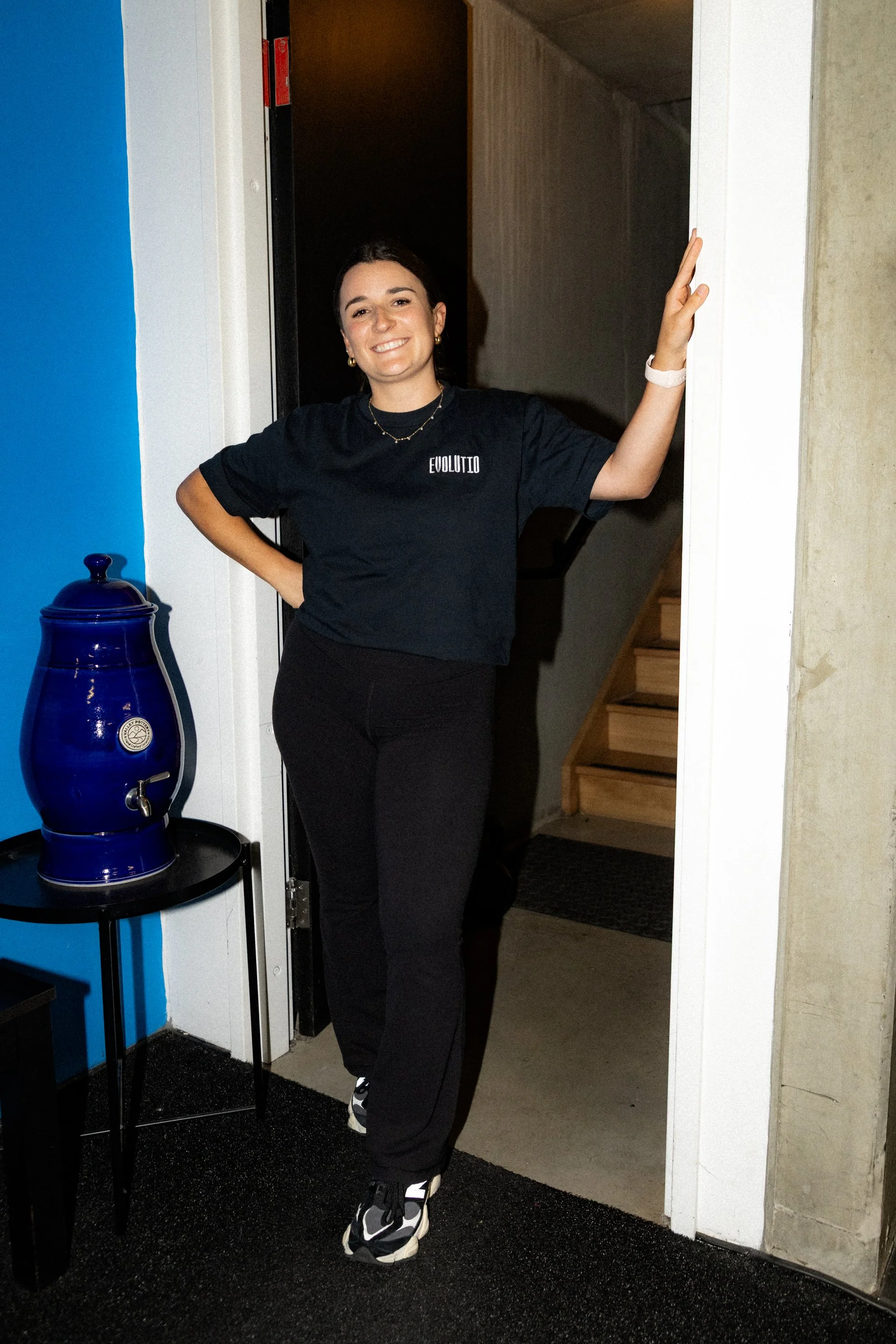
As someone who is currently rehabbing an Achilles tendinopathy on myself, I'm well equipped to tell you how it could feel. Think stiffness during those first few steps when you get up in the morning, or when you hop out of the car after a long drive. Sometimes we see swelling or feel warmth through the back of the tendon if it's particularly grumpy, or you may feel the tendon moving or clicking as you move your foot up and down.
You can feel pain during or after running, and it may get worse with hill or speed work. If you're dealing with a chronic Achilles tendinopathy—AKA it's been a niggle on and off for a long time and you haven't done the right rehab for it—there may be some thickening around the tendon.
Depending on the stage of the tendon irritation, it might feel particularly stiff or painful at the start of a run, but it warms up as you go. But that's not always the case. This heel pain pattern is something we assess thoroughly during your initial consultation.
Why Has It Happened to Me?!
Here comes your physio's favourite answer—it depends. No one human is the same, and the same applies for our runners with Achilles tendinopathy. There are a multitude of reasons why your Achilles might have cracked it, and your sports physiotherapist will work closely with you to help figure out why, so we can not only treat effectively but prevent future issues popping up. There's no point fixing you now, only for the issue to return in 6 months because we didn't address the underlying factors that got you there in the first place.
Common Causes I Have Seen in Runners
Training Load Errors - Too Much Too Soon
Whether it's a big spike in total km's per week, new speed work, integration of new terrains too rapidly, or returning after a long period of time off (think Euro summer for 5 weeks with 0km's, and returning to your normal 60km week with no build up), there are many ways you can overload the tendon from a running load perspective. This is typically the thing that has tipped your tendon over the edge, from a little bit grumpy to "ah I can't walk" and hobbling in to see your physio. The running load for myself at the start of September is a perfect example of this, loading back too quickly post-holiday thinking it would help run off all those Aperols in Greece!
Biomechanical Errors
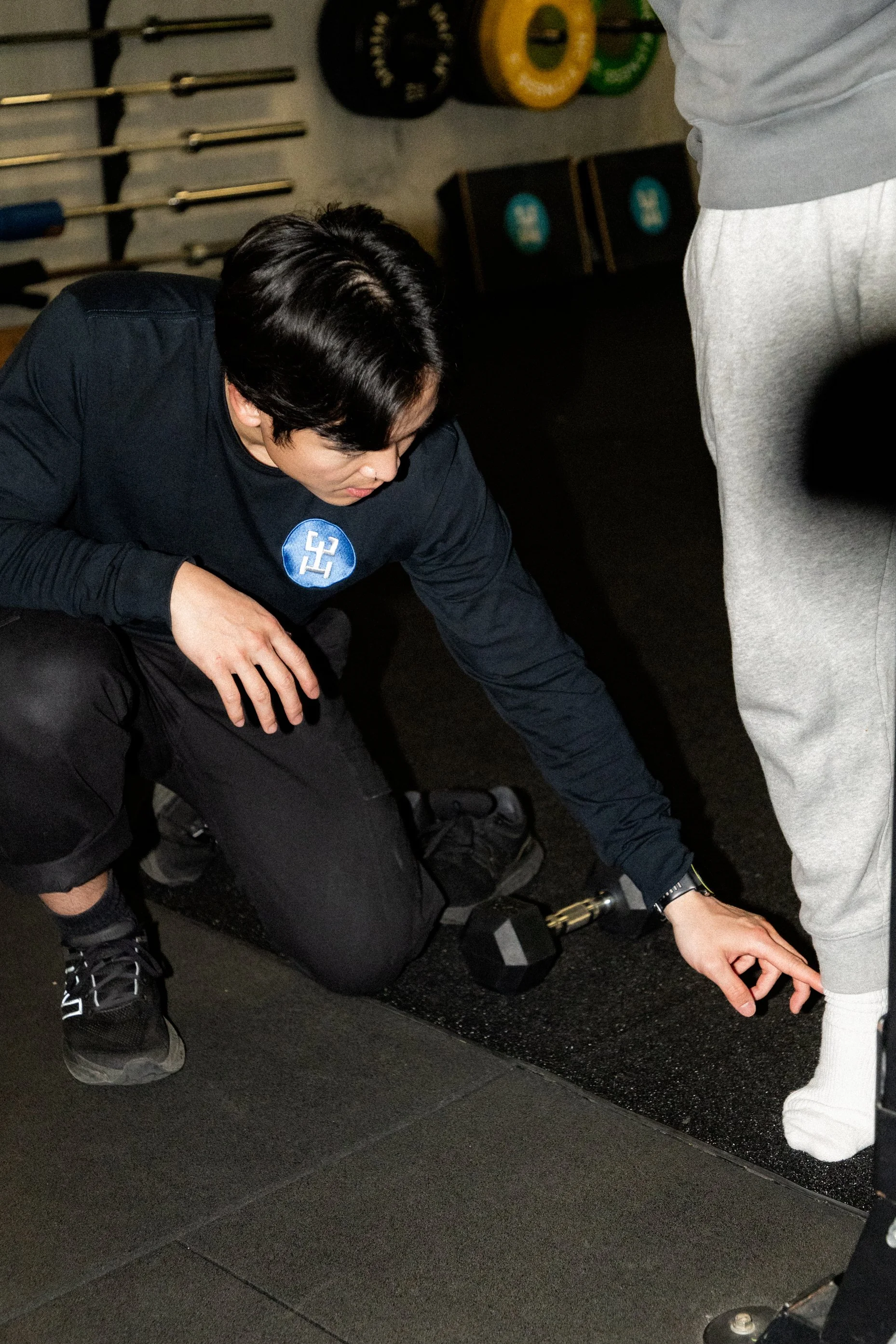
How your calf and ankle complex moves and functions. It could be that you have really weak (and subsequently tight calves), a very wobbly or unstable foot, or you're loading your foot in a funky way as you run. We assess this through observation and gait analysis on our treadmill at our Melbourne running injury clinic. We may even film you and show you back, and then get you to try running again with some different cues to load the Achilles differently depending on the stage of your rehab.
Footwear
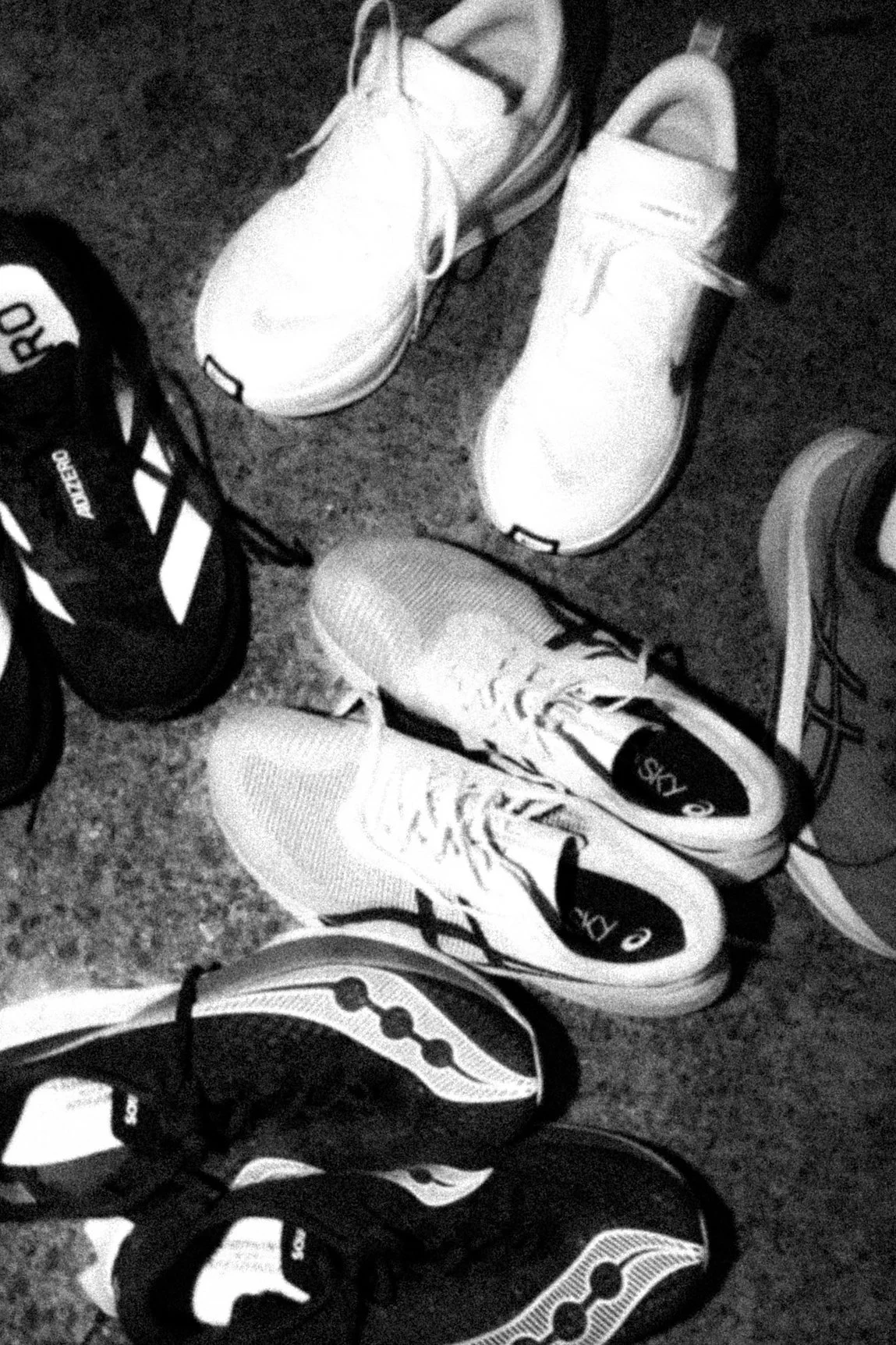
The vessels that take you from A to B. There is not one perfect shoe for any runner, and the same goes for a perfect shoe for an Achilles tendinopathy. But things like heel drop, shoe stiffness, wear pattern, and the age of shoe can all influence how your Achilles is loaded as you pound the pavement. If you are wearing an old pair of sneakers that you've worn into the ground, we're probably going to have a serious discussion around why this isn't the best training shoe for your next half marathon. I normally send people in need of an upgrade to our good friends at The Running Company (Clifton Hill or Albert Park are our closest locations). Here they will do a full analysis of how your foot is moving before recommending a shoe specific to you, keeping in mind your condition. Don't just order some Hoka's online because that's what everyone else at run club is wearing! Shoes alone won't fix your Achilles, but proper footwear can help support your rehab.
Kinetic Chain Factors
What's happening further up the body. Nothing works in isolation, and your Achilles is no exception. If you have weak quads or hips, tight hamstrings, or poor trunk control, it can influence how much load goes through your Achilles and influence how your foot hits the ground. This is why a comprehensive assessment by an experienced running physio is so important—we look at the whole picture, not just where it hurts.
A bit more complicated than just a tight calf hey! The good news? With the right balance of load management and strength work, this tendon injury is very treatable.
How Long Will It Take to Get Better?
It can take between 6-12 weeks for full resolution of Achilles tendon pain, sometimes longer depending on other factors like your age or hormonal conditions, or how many other factors in your biomechanics we need to change.
Many runners notice improvement in walking within 1-2 weeks, depending on the severity. This doesn't mean you won't be running for 12 weeks—tendons need gradual steady load increases, and total rest will not cure this condition!
We will map out a plan specific to you on how we can re-integrate you back to running as soon as possible. We know that you're itching to get back out there, and our job as your Achilles tendinopathy specialist is to minimise any time lost from your running loads.
What Will My Rehab Look Like?
Phase 1: Load Management & Pain Reduction
The goal is to reduce pain and irritation, but we don't want to stop moving completely.
We may use joint mobilisation and soft tissue work in this phase to help manage pain levels and improve range of motion
Supportive shoes + heel lifts have a role in this phase for Achilles tendonitis treatment
Isometric calf raises are your best friend for pain relief and to start to reload the tendon—try 4 x 30 second holds
Do not aggressively stretch your calf/Achilles here! This can further irritate the tendon—more on this below. Try foam rolling your calf instead.
Phase 2: Strength & Capacity Building
The goal is to make the tendon stronger and more tolerant to load with targeted Achilles rehab exercises.
Exercises like calf raises will be a key feature throughout your rehab, but other factors identified in your assessment will also be addressed—e.g. foot intrinsic muscle strength, general lower limb strength
Exercises should be completed at least twice a week within your pain tolerance
Phase 3: Plyometric & Energy Storage Training
The goal is to improve the spring-like properties of your tendon for running.
Exercises like hopping, jumping and skipping will feature in your rehab plan in this stage
This phase is crucial for runners returning to speed work or hill training
Phase 4: Return to Running & Prevention
Phased return to running/jogging will likely start earlier depending on your symptoms, but our main goal of phase 4 is to build you back to your normal pre-injury loads.
We recommend you continue to do your calf strengthening even when you are pain free to prevent recurrence
Your running physio in Melbourne will provide ongoing support to ensure you stay injury-free
Will I Need an Orthotic?
Not necessarily! Orthotics can be helpful in select cases, for example if you have a lot of rearfoot instability (those people who have rolled their ankle ten times and never done anything to address it, I'm looking at you…)
What can be super helpful is a heel lift, which is a small wedge that you put in your shoes. What these do is take the stretch off your calf and Achilles, shortening the muscle tendon unit and decreasing the load on the Achilles as you walk. They can also help decrease the force/shock that comes naturally with heel strike.
If a heel lift or supportive insert is helpful for you, your physiotherapist will guide you on the right choice, and we can make it available at the clinic to save you a trip.
Should I Just Stretch My Calf?
I get asked this a lot, or people come in and tell me this is how they've been trying to fix their Achilles pain. Short answer is no—not aggressively and not at the start at least. If calf pain and tightness are factors we identify in your initial assessment, things like soft tissue work, dry needling and foam rolling can all be utilised to help improve your calf length. What stretching does is compress the tendon against the heel bone, and some suggest that it can increase tendon pressure, which may restrict beneficial blood flow. In the early stages these are two things we want to avoid, and can worsen your symptoms. So stop the stretching!
Achilles Tendon Taping: Does It Help?
Achilles tendon taping can be a useful adjunct in the early stages of your rehab, particularly if you're struggling with pain during daily activities. Taping techniques like kinesiology taping or rigid sports tape can help offload the tendon, provide proprioceptive feedback, and support the ankle-calf complex during movement.
We typically use taping as a short-term strategy while we're building up your strength and capacity. It's not a long-term fix, but it can be really helpful for getting you through those initial weeks when the tendon is particularly irritable. Your physiotherapist at our Richmond clinic will show you how to apply it properly, or we can tape it for you during your sessions.
Best Shoes for Achilles Tendonitis in Australia
Choosing the right running shoe is crucial when you're dealing with Achilles tendonitis. While there's no single "perfect" shoe for everyone, here are some features that can help manage your heel pain:
What to Look For:
Higher heel-to-toe drop (8-12mm) to reduce the stretch on your Achilles
Good cushioning in the heel to absorb shock
Firm heel counter for stability
Appropriate arch support for your foot type
Best Runners for Achilles Tendonitis (Popular in Australia):
ASICS Gel-Kayano series (excellent cushioning and support)
Brooks Ghost or Glycerin (high cushioning, smooth ride)
Hoka Bondi or Clifton (maximum cushioning, higher stack height)
New Balance Fresh Foam series
Saucony Triumph (plush cushioning)
Remember, what works for your training partner might not work for you. I can't stress enough the importance of getting properly fitted at a specialist running store like The Running Company, where they'll assess your gait and foot mechanics before recommending the right shoe for your Achilles tendonitis treatment plan.
Shoe Inserts for Achilles Tendonitis
Shoe inserts (also called heel lifts or heel wedges) can be a game-changer in the early stages of Achilles tendinopathy. Here's what you need to know:
Heel Lifts:
A small wedge (usually 10-15mm) placed inside your shoe elevates your heel slightly, which:
Reduces the stretch on your Achilles tendon
Decreases the load during walking
Helps reduce morning stiffness
Can be gradually reduced as you improve
When to Use Them:
Heel lifts are most helpful in Phase 1 of your rehab when pain is high. We typically start with a thicker lift and gradually reduce the height as your symptoms improve. You should use them in both shoes (even though only one Achilles might hurt) to maintain balance.
Custom Orthotics vs. Off-the-Shelf Inserts:
For most cases of Achilles tendinopathy, a simple heel lift or supportive insert is sufficient. Custom orthotics may be warranted if you have significant biomechanical issues like overpronation or rearfoot instability. Your sports physiotherapist will assess whether you need custom orthotics or if a simpler solution will work.
You can pick up heel lifts from us at the clinic, or from most pharmacies or sports stores. They're inexpensive and can make a real difference in your comfort levels while we work on strengthening your tendon.
Understanding Achilles Rupture vs. Tendinopathy
It's important to distinguish between Achilles tendinopathy and a complete Achilles tendon rupture, as they're very different injuries requiring different treatment approaches.
Partial Achilles Tendon Tear Recovery Time
A partial tear sits somewhere between tendinopathy and a complete rupture. You'll typically feel a sudden sharp pain during activity (different from the gradual onset of tendinopathy), but you can still walk and move your ankle, just with significant pain and weakness.
Recovery Timeline:
Weeks 1-2: Rest, immobilisation (often in a CAM boot), and pain management
Weeks 3-6: Gentle range of motion exercises and progressive weight-bearing
Weeks 6-12: Gradual strengthening and functional exercises
Months 3-6: Return to sport-specific training
Full recovery from a partial Achilles tear typically takes 3-6 months, significantly longer than standard tendinopathy. The good news? Most partial tears heal well with conservative physiotherapy management and don't require surgery.
Ruptured Achilles Tendon Operation & Surgery
A complete Achilles rupture is a serious injury that often (but not always) requires surgical intervention. You'll know if you've ruptured your Achilles—people describe feeling like they've been kicked in the back of the leg, followed by immediate weakness and inability to push up onto your toes.
Achilles Tendon Rupture Surgery Options:
Non-Surgical (Conservative) Management:
CAM boot or cast for 8-12 weeks
Gradual rehabilitation program
Lower risk of complications but slightly higher re-rupture rates
Best for older, less active individuals
Surgical Repair:
The torn tendon ends are stitched back together
Earlier return to rehabilitation with your physiotherapist
Lower re-rupture rates (around 2-5%)
Preferred for athletes and younger, active individuals
Post-Surgery Recovery Timeline:
Weeks 0-2: Immobilisation in a cast or boot
Weeks 2-6: Progressive weight-bearing in a boot with heel wedges
Weeks 6-12: Boot removal, gentle strengthening begins
Months 3-6: Progressive loading and strength work
Months 6-12: Return to running and sport-specific training
Full recovery: 9-12 months for return to competitive sport
If you've had an Achilles rupture surgery, working with an experienced physiotherapist is crucial. We work closely with Melbourne's best orthopaedic surgeons to provide seamless post-operative rehabilitation for our patients recovering from Achilles tendon surgery.
How to Treat Achilles Tendonitis in Runners: Our Complete Approach
At Evolutio, we take a comprehensive approach to treating Achilles tendinopathy in runners. Here's what you can expect when you visit our sports physiotherapy clinic:
Initial Assessment (45 minutes):
Detailed history of your training, symptoms, and goals
Physical examination including strength, flexibility, and biomechanical assessment
Gait analysis on our treadmill (we might even film you!)
Development of your personalised Achilles tendonitis treatment plan
Treatment Techniques:
Soft tissue work and active release techniques to address calf and foot muscle tightness
Joint mobilisation to improve ankle and foot mobility
Dry needling for stubborn muscle tension and trigger points
Progressive strengthening program tailored to your current capacity
Running technique modification if needed
Load management advice to prevent re-aggravation
What Makes Our Approach Different:
We don't just treat the symptoms—we dig deeper to find out why your Achilles got angry in the first place. Was it a training error? Footwear issue? Biomechanical problem? Weakness elsewhere in the kinetic chain? We address all of these factors to not only get you better but keep you better long-term.
As someone who's currently rehabbing my own Achilles, I practice what I preach. I know how frustrating it is when that first step in the morning hurts, or when you have to modify your training. That's why I'm committed to getting you back to running as quickly and safely as possible with evidence-based Achilles rehab exercises.
Frequently Asked Questions About Achilles Tendonitis
How do I know if I have Achilles tendonitis or something else?
Achilles tendonitis typically presents with pain and stiffness in the back of your heel, especially first thing in the morning or after periods of rest. The pain often eases with gentle activity but may worsen with running, jumping, or climbing stairs. If you're experiencing sudden, severe pain with a "pop" sensation, inability to stand on your toes, or visible deformity, you may have an Achilles rupture and should seek immediate medical attention. Your physiotherapist can perform specific tests during your first appointment to accurately diagnose your condition.
Can I continue running with Achilles tendonitis?
This depends on your pain levels and the stage of your injury. Complete rest is rarely the answer for tendon injuries, but you may need to temporarily reduce your running volume or intensity. Some runners can continue with modified training (shorter distances, flat terrain, slower pace) while others need a brief break. Your running physio will assess your specific situation and create a modified training plan that keeps you active while allowing your tendon to heal. Learn more about when to see a physiotherapist for running injuries.
What's the difference between Achilles tendonitis and Achilles tendinopathy?
These terms are often used interchangeably, though "tendinopathy" is the more accurate medical term. "Tendonitis" implies inflammation (-itis), but research shows that chronic Achilles problems are more about structural changes in the tendon rather than acute inflammation. That's why we focus on progressive loading and strengthening rather than just anti-inflammatory treatments. The Australian Physiotherapy Association provides excellent resources on tendon health and management.
How much does Achilles tendonitis treatment cost in Melbourne?
Treatment costs vary depending on the physiotherapist's experience and the clinic location. At Evolutio, our initial consultation is 45 minutes, with follow-up appointments at 30 minutes. You can check our physiotherapy pricing guide for current rates. Most private health insurance policies with extras cover physiotherapy, so check your level of cover. While Medicare doesn't typically cover private physio, you may be eligible for rebates through programs like the Enhanced Primary Care (EPC) plan with a GP referral.
Should I see a physiotherapist or a podiatrist for Achilles pain?
Both physiotherapists and podiatrists can help with Achilles tendonitis, but they have different approaches. Physiotherapists focus on strengthening, load management, biomechanics, and overall movement patterns—which is crucial for treating the root cause. Podiatrists specialise in foot structure and may focus more on orthotics and footwear. For most cases of Achilles tendinopathy in runners, a sports physiotherapist is the best first point of contact. We can refer you to a podiatrist if custom orthotics are needed. Read more about seeing a physiotherapist for foot pain.
How long should I do my Achilles rehab exercises?
Initially, you'll do your exercises daily or every second day during the acute phase. As you progress, 2-3 times per week is usually sufficient. However, even after your pain resolves, we recommend continuing some form of calf strengthening (1-2 times per week) indefinitely as injury prevention. Think of it like brushing your teeth—ongoing maintenance to prevent problems. Wondering if you can overdo physio exercises? Yes, but your physio will give you clear guidelines on volume and intensity.
Can heel lifts cure my Achilles tendonitis?
Heel lifts are a helpful tool in the early stages of treatment, but they won't cure your Achilles tendonitis on their own. They reduce the stretch and load on your Achilles temporarily, which can help manage pain while you work on strengthening. Think of them as a stepping stone, not a destination. We typically use them for 2-6 weeks and then gradually wean you off as your tendon becomes stronger and more resilient.
What if my Achilles tendonitis doesn't improve with physiotherapy?
If you've been diligently doing your rehab for 12 weeks with no improvement, further investigation may be needed. This might include imaging like ultrasound or MRI to check for other issues, or a referral to a sports medicine doctor or orthopaedic surgeon. Rarely, interventions like cortisone injections or shockwave therapy may be considered. However, the vast majority of Achilles tendinopathies respond well to a properly structured physiotherapy program.
Is it normal for Achilles tendonitis to hurt more after exercise initially?
Some discomfort during or after your rehab exercises is normal and doesn't mean you're causing damage. We use the "traffic light" system: green (0-3/10 pain, safe to continue), amber (4-5/10 pain, monitor closely), red (6+/10 pain, reduce load). Your pain should return to baseline within 24 hours. If it's significantly worse the next day or persists, you've done too much and need to scale back. Your physio will help you find the sweet spot.
Can I do yoga or Pilates with Achilles tendonitis?
Yes! Both yoga and Pilates can be beneficial, but you may need to modify certain poses or exercises. Avoid deep calf stretches in the early stages and be cautious with jumping or plyometric movements. Inform your instructor about your injury so they can offer modifications. These activities are great for maintaining overall strength, flexibility, and body awareness during your recovery. Just make sure your Achilles-specific exercises remain the priority.
What are the risk factors for developing Achilles tendonitis?
Several factors can increase your risk: sudden increases in training volume or intensity, poor running technique, inadequate calf strength, limited ankle mobility, improper footwear, training on hard or uneven surfaces, previous Achilles injuries, and being over 30 (tendon healing capacity decreases with age). Some medications like fluoroquinolone antibiotics can also increase tendon injury risk. Understanding your risk factors helps us create a prevention strategy with your running physio.
Should I ice or heat my Achilles tendonitis?
In the acute phase (first 48-72 hours) or after activities that aggravate it, ice can help reduce pain. Apply for 10-15 minutes at a time. However, for chronic Achilles tendinopathy, heat before exercise may help with stiffness and warm-up. Neither ice nor heat will cure the problem—they're just tools for symptom management while you focus on the real treatment: progressive loading and strengthening. The Sports Medicine Australia website has great resources on injury management.
Can tight hamstrings cause Achilles tendonitis?
Yes, indirectly. Tight hamstrings can alter your running mechanics, potentially increasing load on your Achilles tendon. This is part of what we mean by "kinetic chain factors." Everything from your lower back down to your toes can influence how force is distributed through your Achilles. That's why a comprehensive assessment looking at your whole lower limb is so important. Check out our blog on hip extensor muscles to understand more about the kinetic chain.
Is Achilles tendonitis more common in certain sports?
Yes! Running (especially middle and long-distance), basketball, tennis, volleyball, and soccer have the highest rates of Achilles tendinopathy due to the repetitive jumping, cutting, and running involved. Triathletes are also at high risk due to the high training volumes across multiple disciplines. Sports involving sudden accelerations or changes in direction place particularly high loads on the Achilles tendon.
When can I return to running after Achilles tendonitis?
There's no one-size-fits-all answer, but generally, you can start a graded return to running when you can: walk pain-free for 30+ minutes, perform 25+ single-leg calf raises without significant pain, hop on the affected leg without pain, and have completed at least 4 weeks of progressive strengthening. Your physiotherapist will guide your return-to-running program, typically starting with walk-jog intervals and gradually building up. Rushing back is the number one reason for recurrence.

In Summary
Like all injuries, rehabilitation for Achilles tendinitis/tendinopathy needs to be specific and customised to the individual. Our sports physiotherapists at Evolutio have treated hundreds of people with this condition and will guide you through every step of your rehabilitation.
Whether you're dealing with standard Achilles tendinopathy, considering the best running shoes for your injury, wondering about heel lifts, or recovering from a partial tear or surgical repair, we're here to help.
Ready to get your Achilles sorted? Book an appointment with our team at our Richmond clinic. You can learn more about our physiotherapy costs here, and check out our guide on how to prepare for your first physio appointment.
For more information on running injuries and rehabilitation, explore our other blogs on shin splints treatment, foot pain physiotherapy, and find out more about our top physiotherapists in Melbourne.
References
Martin, R. L., Chimenti, R., Cuddeford, T., Houck, J., Matheson, J. W., McDonough, C. M., ... & Carcia, C. R. (2018). Achilles pain, stiffness, and muscle power deficits: midportion Achilles tendinopathy revision 2018. Journal of Orthopaedic & Sports Physical Therapy, 48(5), A1-A38.
Wulf, M., Wearing, S. C., Hooper, S. L., Bartold, S., Reed, L., & Brauner, T. (2016). The effect of an in-shoe orthotic heel lift on loading of the Achilles tendon during shod walking. Journal of Orthopaedic & Sports Physical Therapy, 46(2), 79-86.
Written by Ellie Atkins, Physiotherapist at Evolutio Sports Physiotherapy, Richmond. Ellie specialises in running injuries, post-surgical rehabilitation, and working with rowers and triathletes. Learn more about Ellie or book an appointment.
Related Articles:
