Evolutio Journal
Five of the best orthopaedic surgeons in Melbourne
We are a physio clinic, not a group of orthopaedic surgeons. But these are the surgeons we love working with.
Choosing an orthopaedic surgeon is a little like picking a chocolate out of a box of Cadbury Favourites without the little picture guide telling you which one is which. So we have made a list of some of our favourites, to save you the guesswork. Need someone we have not listed, or a surgeon for a body part that is not covered here? Come and see one of our physios in the clinic, or email info@evolutio.com.au and we will see if we can point you in the right direction.
That is not false modesty. From our clinic in Richmond we see people before surgery and then for the nine months afterwards, which is a useful vantage point: you find out fairly quickly which decisions age well. It is the only real qualification we have for writing this, and we would rather say so than claim an authority we do not have.

How we chose these five, and what you should discount
These are surgeons we refer to. We have professional relationships with several of them and we see their post-operative patients in our rehabilitation gym every week. That gives us useful information other rankings do not have. It also means we are not neutral, and you should weigh this list accordingly.
What we actually weighted:
Subspecialty depth over general reputation. A surgeon who operates on shoulders four days a week will outperform a generalist on your shoulder. Fellowship of the Royal Australasian College of Surgeons is the floor, not the distinguishing feature.
How their post-operative patients present to us. Whether the rehabilitation protocol is clear, whether the patient understood what was done, and whether the surgeon is contactable when something looks wrong at week six. This is unglamorous and it matters enormously.
Willingness to say no. The surgeons we trust most are the ones who send patients back to us untouched when the evidence does not support operating. That judgement is harder to develop than technical skill.
What we did not weight: online review counts, which measure how long a practice has been marketing itself, and hospital prestige on its own.
The best surgeon for your problem is rarely the most famous one. It is the one who does your specific operation most often.
1. Dr Austin Vo — shoulder and knee
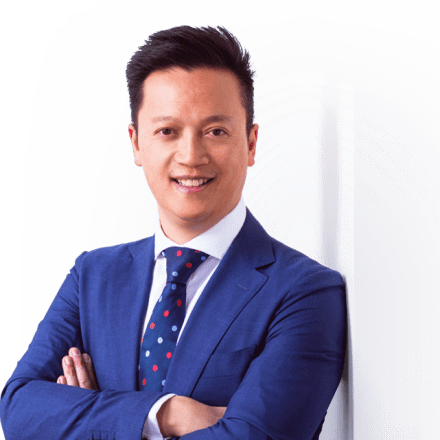
Dr Austin Vo is an arthroscopic shoulder and knee surgeon whose training reads unusually widely even by fellowship standards.
After his RACS fellowship in 2011 he trained in Edinburgh in joint replacement, at Oxford's Nuffield Orthopaedic Centre in arthroscopic and reconstructive surgery, in Annecy with Dr Laurent Lafosse, in Lyon on the Latarjet procedure with Dr Gilles Walch, and at the Pan Am Clinic in Canada in sports medicine, including work with an NHL team.
The Annecy and Lyon periods are the significant ones. Those two centres drove much of modern arthroscopic shoulder practice, and surgeons who have spent time there tend to attempt arthroscopically what others would open.
Consider him for: shoulder instability, rotator cuff pathology, complex knee ligament reconstruction.
What we see afterwards: his patients generally arrive understanding what was repaired and what the restrictions are, which makes shoulder rehabilitation considerably more straightforward.
2. Dr Julia Kirby — young athletes and growth plate injuries

Dr Julia Kirby holds a subspecialty that barely exists in Australia: surgical management of athletes whose growth plates are still open.
She trained at Adelaide, completed her surgical residency at The Alfred, and holds a Master of Sports Medicine from Queensland with a Dean's Commendation. Her fellowships include paediatric orthopaedic sports medicine at Texas Scottish Rite Hospital in Dallas, one of the few institutions worldwide doing that work at volume, plus orthopaedic trauma at Austin Health.
This matters more than it sounds. You cannot apply adult techniques to a fourteen-year-old — drilling across an open physis can arrest growth and leave a limb-length discrepancy. Adolescent ACL reconstruction requires growth-sparing methods most surgeons never learn.
She is an active member of the Pediatric Research in Sports Medicine Society and publishes on tibial spine fractures and meniscal injury in youth.
Consider her for: ACL and meniscal injuries in skeletally immature athletes, patellofemoral instability in adolescents, junior sporting injuries where growth is a factor.
Relevant locally: junior AFL and netball generate exactly these presentations across Melbourne's inner east every winter.
3. Mr Ian Al'Khafaji — knee, hip and sports reconstruction
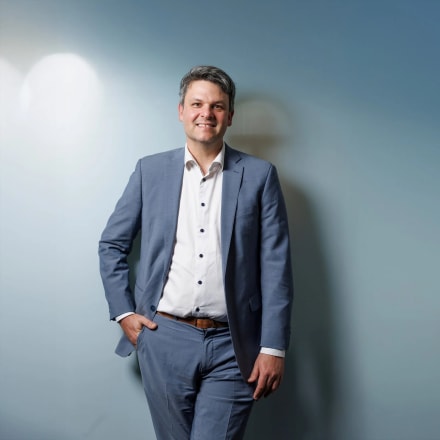
Mr Ian Al'Khafaji is a US-trained, American board-certified orthopaedic surgeon and a Fellow of the Royal Australasian College of Surgeons, practising from Victoria Sport & Joint Clinic in Fitzroy — a few minutes from our Richmond clinic.
Originally from Tampa, he completed his medical degree at the University of South Florida and his orthopaedic residency at Wake Forest in North Carolina, with extended rotations at the Lyon School of Knee Surgery in France and the Oslo Sports Trauma Research Center in Norway. He then completed a sports medicine fellowship at the Kerlan-Jobe Institute in Los Angeles, treating professional athletes and developing expertise in cartilage restoration including meniscal and cartilage transplantation.
He came to Melbourne for a knee preservation fellowship at OrthoSport Victoria, and previously worked at Arizona's busiest trauma centre. He holds positions with ISAKOS, AANA, AOSSM and ISHA, and consults for professional surfers on the World Surf League.
Two things make him particularly relevant to the patients we see.
The joint preservation emphasis. Cartilage and meniscal transplantation are options for younger patients facing an early joint replacement — a genuinely different conversation from "we'll replace it eventually". His current research covers ACL injury, hip arthroscopy and femoroacetabular impingement, which between them account for a large share of the hip and knee presentations in our clinic.
He holds an academic appointment in physiotherapy. He is a Senior Fellow with the Department of Physiotherapy at the Melbourne School of Health Sciences and the Melbourne Medical School, and an Associate Research Clinician at the OrthoSport Victoria Institute. A surgeon who teaches into a physiotherapy faculty tends to write rehabilitation protocols that a physiotherapist can actually work with, and to treat the post-operative months as part of the operation rather than someone else's problem.
Consider him for: ACL reconstruction, cartilage and meniscal preservation, hip arthroscopy and FAI, knee replacement in active patients.
What we see afterwards: his ACL patients arrive with clear criteria-based milestones rather than a calendar, which is how the evidence says it should be done.
4. Associate Professor Claudia Di Bella — bone tumours and joint preservation

Associate Professor Claudia Di Bella works at the point where orthopaedic surgery meets regenerative medicine, and is included here for a narrow but serious reason: musculoskeletal tumour surgery is a subspecialty with very few practitioners in Victoria.
She graduated from Bologna and trained at the Rizzoli Institute, Italy's principal orthopaedic centre, before a musculoskeletal tumour fellowship at St Vincent's Hospital. She holds a PhD in oncology and experimental pathology.
Her research involves 3D bioprinting and stem cells for cartilage repair. That work is not standard care today and should not be presented as though it were, but it places her among a small group internationally working on alternatives to joint replacement.
Consider her for: bone and soft tissue tumours, complex reconstruction after tumour excision, arthritis where joint preservation is being weighed against replacement.
Note: if you have been referred for a suspected bone tumour, subspecialty experience is not optional. This is the one situation on this page where we would tell you to travel across Melbourne rather than choose on convenience.
5. Dr Jason Harvey — hand, wrist and elbow
Dr Jason Harvey operates on hands, wrists and elbows, which is a narrower field than it sounds and one where general orthopaedic training is genuinely insufficient.
He graduated from Sydney in 1997, trained in general surgery at Harvard-affiliated hospitals and Harbor-UCLA, completed his orthopaedic residency at Harbor-UCLA in 2005, then a upper limb and peripheral nerve fellowship at Royal North Shore in Sydney. He was admitted to RACS fellowship in 2007.
He is Director of Training in Orthopaedics at Dandenong Hospital and Deputy Director for the Victoria and Tasmania training region — meaning his peers selected him to train the next generation, which is a form of assessment no marketing can produce.
Consider him for: wrist arthroscopy, distal radius and scaphoid fractures, base of thumb arthritis, elbow instability, finger joint replacement.
Relevant locally: falls onto an outstretched hand from cycling on the Capital City Trail and CrossFit wrist injuries both land in this category regularly.
Matching your problem to the right surgeon
Subspecialty match is the single most useful filter you can apply. In rough terms:
Shoulder instability or rotator cuff — Dr Vo. Also see our separate guide to shoulder surgeons in Melbourne.
ACL, cartilage, meniscus or hip impingement — Mr Al'Khafaji.
An injured teenager still growing — Dr Kirby.
Suspected bone or soft tissue tumour — A/Prof Di Bella.
Anything from the elbow down — Dr Harvey.
Two other filters worth applying. Ask how many of your specific operation they do a year. Any good surgeon will answer it without offence. And ask what happens if you decide not to operate — the answer tells you whether surgery is being offered or sold.
Before you see any of them, see a physiotherapist
We would say this, so treat it accordingly. But it holds for reasons that have nothing to do with us.
Many GPs now require a documented trial of conservative treatment before issuing a specialist referral. Beyond the paperwork, a proper assessment does three things: it clarifies the diagnosis, since referred pain regularly sends people to the wrong specialist; it establishes baseline strength and range so post-operative progress can be measured against something; and it occasionally resolves the problem.
Partial rotator cuff tears, degenerative meniscal tears, early osteoarthritis and most tendinopathies frequently respond well to loading programmes. Complete ligament ruptures, displaced fractures and advanced arthritis with genuine functional loss generally do not.
If you do proceed to surgery, pre-operative rehabilitation is not a delay. Patients who arrive at theatre with better strength and range consistently recover faster, and they understand what the following months require.
A surgeon who is happy for you to try physiotherapy first is demonstrating judgement, not hedging.
What it costs and how long you will wait
All five consult privately. Broadly, surgeon fees run from around $2,000 to $8,000 depending on complexity, anaesthetist fees $1,500 to $3,000, with hospital fees on top and variable by facility and length of stay. Private health insurance covers a portion; gap payments vary considerably between surgeons and funds.
Initial consultations typically sit two to eight weeks from referral, longer for the most subspecialised practices. Ask for a written estimate of out-of-pocket costs before you commit — every practice above will provide one, and Services Australia can confirm what Medicare contributes.
Starting physiotherapy while you wait is almost always worthwhile. Deconditioning during a two-month wait is real and it costs you time on the other side.
Common questions
Do I need a GP referral?
Yes. Medicare requires a GP or specialist referral for a rebated specialist consultation. Your GP can also help you choose between surgeons, and many have direct experience of local outcomes.
Can physiotherapy replace surgery?
Sometimes, and it depends entirely on the diagnosis. It is often worth trying first for partial tears, degenerative meniscal injury, early arthritis and tendinopathy. It is not a substitute for a complete ligament rupture, a displaced fracture, or advanced arthritis causing real functional loss. The value of a proper assessment is knowing which category you are in.
Is "orthopaedic" different from "orthopedic"?
No. The first is the Australian and British spelling, the second American. Same specialty. The Australian Orthopaedic Association uses the former.
How long is recovery?
Broadly: arthroscopic procedures three to six months to sport; ACL reconstruction nine to twelve months to competitive sport; joint replacement three to six months for most function; rotator cuff repair four to nine months depending on tear size. These assume you actually complete the rehabilitation.
What should I bring to the first appointment?
Your referral, Medicare and health fund details, actual imaging files rather than just the reports, a list of medications, your surgical history, and any physiotherapy notes. Write your questions down beforehand — consultations move quickly.
How do I check a surgeon's registration?
Every registered practitioner in Australia is searchable on the AHPRA register, which shows qualifications, specialty registration and any conditions on practice. It takes a minute and is worth doing for any specialist.
Evolutio is a sports physiotherapy clinic on Bromham Place in Richmond. We provide pre-operative and post-operative rehabilitation, and we work directly with orthopaedic surgeons across Melbourne. Initial assessments are 45 minutes and you see the same physiotherapist each visit.
Alex Drew is the founder and director of Evolutio Sports Physio in Richmond, Melbourne, and has been treating patients since 2013. This page reflects our own referral practice. It is general information, not medical advice, and no surgeon listed has paid to appear. Read about how we measure our outcomes or how the clinic works.